
Home Décor Trends to Elevate Your Space

Home Tips Jag Dhamrait 24 Mar

Home décor trends with blue kitchen cabinets and modern finishes

A contemporary kitchen renovation remodeling featuring a center island, hardwood floor and quartz counter.

Minimalism is dead.

In 2026 we’ve moved on, adding colour, vibrancy, new features and personality galore into our homes.

Here are the biggest trends you can keep your eyes (and budget) set on this year:

Grandma Chic: If your birth year starts with 19, you’ll probably feel nostalgic about this trend. Things like florals, ruffles and pleated skirts are back on couches and chairs. Lamp shades, antique clocks, China cabinets and anything else you saw in your grandma’s house in the 80’s is back in style. Your entire house doesn’t need grandma’s approval, but it’s time to proudly and stylishly display any heirlooms she passed down.

Dark Design: Terracotta, dark green, chocolate brown, darker woods… the stylish home has plenty of these colours in 2026. If you want to try it, consider painting your existing cabinetry, adding a chair or couch in a moody shade, or even choosing an area rug that does double duty in style and function while it hides the fact you haven’t vacuumed this week (or month).

Feeling Blue: Blue may not be the Pantone colour of 2026 – but it’s everything in fashion, design, social media content, makeup, even dining. Any shade will do, from icy to electric. It’s super easy to add to your home with things like furniture, dishes, artwork, rugs, or even knickknacks (those are back too… keep reading).

Bidets: Thanks to the explosion in bidet popularity, it’s easy to find an attachment, toilet seat, sprayer or entirely new toilet to bring the bidet lifestyle into your home. Plus, they reduce toilet paper use, saving your home plumbing and the environment! They’re fairly easy to install yourself so if you’re keen on trying one, a trip to your local hardware store is probably all you need.

Walls Are the Art: Wallpaper is back, baby! There are infinite cool patterns and colours to choose from, including some really interesting and personal choices. And don’t forget the fifth wall to every room – the ceiling! Paint it or wallpaper it too, adding drama, interest, and even heights to the space.

Personal Storytelling: This unique approach is about telling your own story, piece by piece. Any room can feel welcoming because nothing is too precious or perfectly styled. It won’t happen overnight though. It’s a rebellion against fast fashion and staged decorating, as you collect everything over your lifetime rather than in one trip to Pottery Barn. Display your travel souvenirs, favourite knickknacks, unique furniture and thrifted gems and enjoy sharing a memory or telling an origin story of your favourite treasures to your guests.

What’s Out

If you’re looking to thoughtfully declutter as you modernize or redecorate your home, here are the top three things to part with.

  • Fake plants. And its cousin, the 2000’s oversized vase with dried wheat.

  • Mass produced wall art. That print of le chat noir or Campbell soup are heading for retirement (or the attic for when they come back in style).

  • Word art. We don’t live laugh or love this look anymore.

I’d love to hear what interior decorating styles and trends you have going on – and if you’re looking at any of these trends to update your existing style. If your home needs a bigger upgrade than just some new design elements, I can always help you sort through the financing options. Call text or email me anytime!

Economic Insights from Dr. Sherry Cooper

Economic News Jag Dhamrait 10 Mar

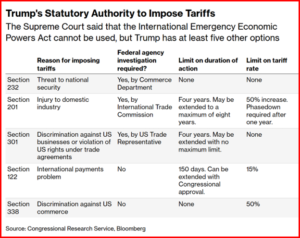
Last month, the US Supreme Court issued a verdict on the tariff lawsuit. The ruling invalidates a large portion of the tariffs that Trump implemented in 2025.However, there are other ways that he can introduce import taxes. Here’s a chart showing some of the other means these tariffs could be put back on the table:

Chart showing Trump statutory authority to impose tariffs after the tariff lawsuit

Source: Congressional Research Service, Bloomberg

Realistically, most affected tariffs will likely be reinstated by other means – and a temporary blanket 10% tariff already has. Trump has already ordered a raft of trade investigations that should allow him to enact more permanent tariffs, too.

While this could be good news for Canada, in the immediate future, it only increases uncertainty, further dampening consumer and business confidence and increasing the likelihood that spending decisions, whether for housing or business fixed investment, will be postponed.

Fraud Awareness: Essential Info for Today’s Digital World

Personal Finance Jag Dhamrait 1 Mar

Senior man on cell phone - Fraud awareness for phone scams and digital fraud

Fraud awareness starts with recognizing red flags in calls, emails, texts, and online messages.

March is fraud awareness month, a great reminder that no matter who you are, scams are lurking right around the corner (or in the next email, call or post!). 2026 will undoubtably throw more sneaky, compelling, and downright dastardly scams than ever. So, we’re going to look at how and why fraud scams work, spotlight the techniques scammers use, give you tips on how to recognize a scam, and teach you what you can do to protect yourself.

Why do scams work? 

Here are my 4 E’s of an effective scam:

  1. Ego: Some people think they are too smart to fall prey. Their overconfidence says they don’t need to be cautious and that exposes them to unnecessary risk.

  2. Evolution: Scams are diverse and sophisticated – it’s not a Nigerian Prince asking you to share his millions anymore! The constant changing and diversification of scams is fuelled by new technology, making it harder to spot a fake.

  3. Education: A lack of awareness means you’re a step behind a fraudster, and you’re unlikely to recognize the newest and greatest plots.

  4. Exposure: We’re online a LOT, constantly seeing fake ads, sharing our email addresses to get discount codes, commenting on social media posts – you name it. We constantly expose ourselves to predators.

Techniques Scammers Rely On

The first strategy scammers use is emotional manipulation. They’ll create uncomfortable feelings like fear or urgency to get you to act quickly. They’ll also go the sympathy and goodwill route to appeal to your good nature and empathetic side so you help them.

The second strategy scammers use is cognitive bias. It’s our predisposition to a certain mindset that would make you more willing to comply. A few examples:

  • Optimism Bias: You don’t automatically suspect a scam

  • Truth Bias: You assume people are telling the truth

  • Authority Bias: You trust and comply with authority figures (like police or government)

The third strategy scammers use is influence. They’ll compliment you or pretend to have similar likes so they build a relationship with you. They’ll act as experts or authorities so that you trust them. And, they’ll commit to it, starting slow and building over time and increasing their requests.

How Did Scammers Get So Good?

They practice. They aren’t afraid to fail. They don’t take no as an answer. And, perhaps most importantly, they embrace technology. It catches victims unaware and drastically improves their reach and persuasiveness. Here are their fanciest tools.

  1. AI: AI makes it easy for scammers to create professional-looking websites, social media content, online ads, fake photos, persuasive emails and texts, and so much more.

  2. The Dark Web: Scammers can buy nearly any data they want, plus fake identities, malware tools, stolen credit card numbers, ransomware, a fake escrow service or even hire hackers.

  3. Deepfakes: Fake videos that clone real people and real voices are easy to create with free or cheap specialized software. These fake videos can promote products, laud fake charities or causes needing donations, even endorse ponzi schemes and pump-and-dump investments.

  4. Spoofing software: Fraudsters can mimic legitimate phone numbers, emails, or websites and even trick you into thinking you’re dealing with a real person you know.

Red Flags 

Scammers aren’t just straight up asking for your SIN and banking info anymore. Here are some common themes to watch for:

  • Urgency, including limited time offers or requests to act now

  • Threats, like an account will be closed, you’ll be arrested, or a fine is forthcoming

  • Uncommon payment forms, like wanting gift cards, cryptocurrency, or Venmo transfers

  • Secrecy, warning you not to tell friends or family or alert law enforcement

  • Poor quality, like spelling errors, weird links, or other telltale signs AI has been hard at work

  • Reciprocity, as in you get hired but you pay for your own training, or you won a prize but you have to pay to receive it

How to Avoid Falling for Scams 

If you don’t want to be blindsided by a scam, the first step is to know that scams exist. Staying current on the latest schemes will go a long way. Be skeptical about almost everything online! Installing ScamShield, call blocking or anti-virus software can help prevent a scam artist from contacting you. Multi-factor authentication is a great way to stop scammers from accessing your online accounts.

If you get faced with a scam, take a step back and think about the legitimacy of the situation. Call a trusted friend or loved one and run the situation by them. Just hearing it out loud might make you come to your senses! Practice saying no. Disconnect from the situation and reach out to the company independently (like the CRA, bank, cell phone company or store) to confirm the request or offer is real. Finally, monitor your accounts for any unauthorized activity if you think you might have given away too much information.

Conclusion

If you’d like to learn more, the FCT fraud insights centre is a great place to start. Or, get your information in video form in Mastercard’s Anatomy of a Scam docuseries. Hopefully shining a spotlight on these tactics keeps your safety top of mind. Or as Bert and Gert would say, “Stay Alert, Stay Safe”!

Valentine’s Day Your Way

Home Tips Jag Dhamrait 14 Feb

Valentine’s Day ideas with child and dog decorating cookies at home

Valentine’s Day does not have to be fancy. Simple activities at home can make the day feel fun, relaxed, and personal.

Roses, chocolates and cards not doing it for you in 2026? You’re not alone! But even if you are, you’re still welcome!

Here are my best suggestions to enjoy Valentine’s Day without the pressure of a fancy dinner out or even another human to share it with.

For the foodies: Bake a batch of sugar cookies and decorate them – either with cute red and pink hearts, or black bows and arrows. There are no rules here! Or, try out a mixology or cooking class online and learn how to make something new and delicious.

For the active folk: Draft a checklist of festive or un-festive items (like someone in a red coat, a squirrel, a restaurant with a line, a house with Valentine’s décor, a hockey jersey, an amazon truck, etc.) and go for a walk outside until you find everything on your list. Or, lace up your skates and stuff your pockets with candy or hot chocolate to fuel an outdoor skating session.

For a group: Invite your galentines or palentines over for a game of Catan, Blokus, Wizard or Hues and Cues. Or, make a reservation for your group at a board game café and play as many as you can.

For the anti-consumerists: Write some poetry (here’s how if you’re a newbie), then do a light hearted reading of your work (people, pets, or your camera are all great audiences). Or, do some volunteering at an animal shelter, food bank, or wherever else speaks to you; give back instead of giving gifts!

For the gardener: Make wildflower seed bombs. Combine equal parts wet clay (or half the amount if you have dry clay) and soil (or a compost mix). Gradually add water until you get a dough-like consistency. Then, add in your seeds (about a teaspoon per handful of concoction) and form them into balls or pucks. Let everything dry until early spring and then toss the seed bombs wherever you want those flowers to grow (no need to plant/bury!).

If you want to make it more Valentine’s Day themed, add some pink or red food colouring to the dough and shape your bombs into hearts. Lovely.

Economic Insights from Dr. Sherry Cooper – Feb 2026

Economic News Jag Dhamrait 3 Feb

Economic Insights from Dr. Sherry Cooper on Canada trade diversification

Dr. Sherry Cooper shares economic insights on Canada’s trade diversification, global partnerships, and economic outlook.

Amid significant shifts in global trade dynamics, Canada is redefining its position on the world stage. While the United States continues to make headlines with its assertive trade policies, other nations—Canada included—are forging ahead, adapting and expanding their international relationships.

Last week, Prime Minister Mark Carney’s visit to Beijing marked the first Canadian prime ministerial trip to China since 2017, culminating in a landmark trade agreement. Canada lowered its tariff on Chinese electric vehicles, while China reciprocated by reducing tariffs on Canadian canola seed. Carney emphasized the importance of renewing and strengthening the Canada-China partnership, asserting that these efforts signal a move toward a new global order, with Canadian exporters increasingly seeking opportunities beyond the US market.

Impact on Economic Sectors

The prevailing uncertainty surrounding trade—driven by tariffs and shifting alliances—has contributed to a decline in housing market activity, particularly in Ontario and British Columbia. In contrast, Quebec’s housing market remains more robust, although tariffs on aluminum and lumber have dampened broader economic activity in the province and across Atlantic Canada.

Despite widespread concern about these developments, Canada’s outlook for broadening trading partnerships is stronger than many anticipate. The country possesses substantial competitive advantages that position it well to meet international demand over the next decade.

Canada’s Competitive Advantages

Canada’s strengths lie in its rich natural resources, including oil and gas, uranium, critical minerals, food and agriproducts, fresh water, and Arctic access. These endowments provide a solid foundation for trade diversification.

Historically, 75% of Canadian exports have gone to the US, with agreements like CUSMA offering tariff protections for many Canadian goods. However, recent developments and strategic initiatives are opening new opportunities, especially in the energy and agri-food sectors, where Canada’s geography, resource reserves, and trade agreements align with growing demand from Europe and Asia.

Cross-Cutting Advantages

Resource Endowments

Canada is a leading global supplier of scarce commodities, including crude oil, natural gas, potash, canola, and other agri-food products. Its status as the world’s largest producer of potash is crucial to the US fertilizer supply, and there is significant potential to expand exports to major importers like Brazil, India, and China.

Trade Architecture

Canada benefits from a robust network of trade agreements, including CETA with the EU and CPTPP with Asia-Pacific economies. These agreements lower barriers for exports to Europe and Asia, offering advantages over non-preferential competitors. The country’s trade strategy now aims for a 50% increase in overseas (non-US) exports, a goal already being met ahead of schedule in some sectors.

Reputation and Standards

Canada’s reputation as a politically stable, rules-based, and relatively low-carbon supplier is increasingly valued by global buyers prioritizing security of supply, especially in energy and food. This reputational premium is particularly important for European and Indo-Pacific customers seeking to mitigate risks posed by Russia and certain Middle Eastern suppliers.

Sectoral Opportunities

Oil and Gas: West Coast Egress to Asia

The Trans Mountain Expansion (TMX) and LNG Canada projects have significantly increased Canada’s pipeline and liquefaction capacity, providing direct access to Pacific markets. Since 2017, TMX has enabled a 130% rise in energy exports to overseas destinations, with LNG shipments reaching Japan, South Korea, China, and Malaysia. Chinese purchases of Canadian oil have reached all-time highs.

For North Asian markets, Canadian Pacific Coast LNG shipments are much faster than those from the US Gulf Coast, cutting approximately 20 days off voyages to South Korea. This geographic advantage, combined with Canada’s vast gas reserves and political stability, makes it a structurally competitive supplier to Asian gas markets.

Following the Ukraine conflict, Europe and Asia have strong incentives to diversify their energy sources away from Russia. Canada’s new export infrastructure directly supports this demand, with the global LNG market expected to remain tight through the mid-2020s, offering a window for new Canadian supply to secure long-term contracts.

Metals, Steel, Aluminum, and Autos: Input Strength vs. Finished Goods

Canada’s primary advantages are in upstream metals and minerals, such as iron ore and critical minerals, rather than in finished steel and automotive products. Metal and non-metallic mineral exports have grown rapidly—up about 74% since 2017—driven by gold and other metals.

For steel, aluminum, and auto parts, Canada’s ability to market low-carbon content and secure supply is a key differentiator, especially in jurisdictions tightening carbon and supply-chain regulations. While Canada’s participation in multiple free trade agreements provides tariff preferences in Europe and Asia, the integration and scale of the North American auto platform continue to present challenges for diversification in finished goods.

Agriculture: Canola, Potash, and Food Products

Canada plays a central role in global canola and potash markets and faces strong demand from large agricultural economies outside the US. The country supplies roughly 85–90% of US potash imports but is positioned to pivot toward growing markets such as Brazil, India, and China if US trade becomes less attractive.

China is a major buyer of Canadian raw canola seed and has greater processing capacity than other markets. Canada’s access to Asian and European trade channels further supports diversification. According to Farm Credit Canada, approximately $12 billion CAD in food and beverage exports could be redirected from the US to other markets or to domestic buyers, highlighting significant potential for reallocation.

Canada’s surplus potash supply helps keep domestic fertilizer costs low, allowing grain and oilseed exports to remain competitively priced in third markets. Combined with high standards for food safety and sustainability, Canada presents a compelling value proposition in premium and bulk agri-food markets.

Hydropower and Virtual Water

In the near term, “water exports” are primarily realized through hydroelectric power from resource-rich provinces, rather than bulk water shipments. These hydro resources support green power exports, particularly to the northeastern US, and may contribute to future cross-border electricity grids.

As climate risks grow, Canada’s abundance of water and arable land creates long-term advantages in producing water-intensive goods such as grains, oilseeds, forestry products, and certain metals—positioning the country to supply water-stressed regions globally.

Policy and Political Economy

Canada’s federal strategy now explicitly positions trade diversification as central to risk management and economic resilience. Dedicated tools and financing, including Export Development Canada and trade commissioner services, are helping exporters access non-US markets. Combined with private-sector investments in logistics and port capacity, these efforts continue to reduce the costs and barriers associated with reorienting exports.

Conclusion

Canada’s structural advantages enable a gradual reduction in marginal dependence on the US, particularly in energy, agri-food, and some metals and advanced manufacturing sectors. However, full substitution in autos and certain processed goods remains unrealistic and inefficient due to the deep integration of the North American market. Overall, Canada’s expanding network of trading partners and robust resource base position it well for a resilient economic future.

As these successes mount, Canadian consumer and business confidence will rise, re-igniting pent-up demand in housing. As we move through this transition year, optimism will mount, and reduced housing prices, combined with lower mortgage rates, will return housing activity to more normal levels in the hardest-hit provinces of Ontario and British Columbia.

Estate Planning: Are You Covered?

Personal Finance Jag Dhamrait 27 Jan


“New Year, new you” may be a cliché but it is for a reason! The New Year always has us thinking about where we are now, and where we want to end up. When it comes to your personal goals, a review of your finances and estate should be at the top of your list.

Proper estate planning can ensure that you have a stress-free year knowing you are covered!

Is your will up-to-date?

The purpose of a will is to outline your assets and determine how they will be distributed, as well as who will be in charge of managing affairs. Some key components to include in this document are:

  • Up-to-date list of your significant assets; note the location if outside your province or outside Canada.
  • Who will inherit your assets? And which?
  • Outline of where you want assets to pass outside your estate to avoid probate fees (e.g., an insurance policy, an RRSP)? Do this via beneficiary designation.
    • If they are minors, do you have a trust or other provisions in place?
  • Is the list of beneficiaries in your will up to date? Have there been recent births, deaths or marriages in your family?
  • Have you included alternates in case your named beneficiaries predecease you?
  • Do you want to give to charities or other organizations?
  • If you have children, have you indicated a guardian and spoken to them?
    • Did you include an alternate in case the guardian you chose is unable to commit?
    • Have you reviewed your choice of guardian as your child grows older?
  • Your executor who will carry out your wishes after you die. You can name one executor or two or more co-executors. Be sure to name one or more alternates as well.

Have you assigned a power of attorney?

Another important (and often overlooked!) aspect of estate planning involves naming a power of attorney. This individual is someone you trust to make decisions for you should you become unable to do so due to injury or illness, whether temporary or otherwise.  Power of attorney documents are created for you by a wills and estates lawyer (or notary in Quebec) as part of your estate plan.

Do you have mortgage protection insurance?

Through Manulife Mortgage Protection Plan (MPP), you have the opportunity to add a portable insurance policy to your mortgage that helps protect your loved ones and your home should something unexpected happen to you.  Unlike bank insurance, MPP is a portable life and disability product that you can take with you, from lender to lender and property to property.  This gives you the utmost future flexibility and is unlike bank insurance products which tie you down exclusively to them.  To ensure you get the best rate at renewal, you must have invested in an insurance product like MPP that will give you the freedom to move!

Mortgage life insurance will protect your family’s future by paying out your mortgage should the mortgage holder pass away. Manulife will also make your mortgage payments while your claim is being adjudicated, so there is no added stress for a loved one at an already difficult time.  Mortgage disability insurance will take care of your mortgage payments plus property taxes if you become disabled.  Disabilities from sickness and accidents are relatively common and will affect 1 in 3 borrowers throughout their mortgage amortization.  Manulife provides budget-friendly payment options, the ability to top-up your coverage and so much more.

These are all important aspects to consider to ensure your estate and family will be provided for should something happen. While never a fun topic, it is an important one and the better prepared you are, the better off your loved ones will be.

I would be happy to discuss coverage with you to ensure peace of mind for your family and their future.

Ice to Meet You: Build a Skating Rink in Your Own Backyard

Home Tips Jag Dhamrait 20 Jan

Backyard skating rink at home with snow and hockey net

A common winter scene of a backyard hockey rink in Canada

A skating rink in your own backyard? Yes, please!

A skating rink is a great way to keep kids busy, stay active yourself, entertain guests, or even use as a conversation-starting background to your social media content. Here’s how to make this easy, enjoyable feature at home this month.

  1. Get a tarp: You’ll need to line the area you want to skate on with a heavy-duty tarp. You can get all kinds of sizes, so pick one that suits the area you’re looking to cover. Amazon is an easy destination but a hardware store might be a better bet so you can see and feel the quality before buying. If you think you want to make this rink year after year, consider investing in a quality tarp from heavydutytarps.ca.
  2. Frame the area: Set up a border for your rink using wood you have – scraps, 2x4s, logs, whatever! You can also buy long boards at that same hardware store you’re shopping for your tarp at if you don’t have something suitable at home already. Keep the frame secure with brackets or angles. Alternatively, you can use snow for a frame – just be sure it’s firmly packed and fully covered by the tarp. The frame should be a bit smaller than the tarp’s area, as you’ll want the tarp to come at least 10cms up the sides.
  3. Flood your rink: Use your backyard hose to flood the area until it’s at least 5 centimeters deep. Now the hard part – wait for it to fully freeze.
  4. Decorate your creation: Use strings of outdoor lights to illuminate your rink so it can be used well into the evening. Other fun additions are folding chairs with blankets, an old scrap of carpet where you can put skates on and off, a portable fire pit, a cooler to keep your beverages in, or even an outdoor patio lamp style heater (just not too close to the rink!).

I hope you give this a try – and don’t let my invite get lost in the mail if you do!

Pantone Color 2026: Cloud Dancer & Mortgage Clarity

Home Tips Jag Dhamrait 14 Jan

Pantone color 2026 Cloud Dancer mortgage renewal strategy

Pantone’s 2026 Color of the Year is Cloud Dancer, PANTONE 11-4201

Pantone color 2026 is Cloud Dancer, a soft and calming white that reflects clarity, quiet reflection, and a fresh reset.

As we enter a new year, that message feels very relevant for many homeowners. After years of rising costs, shifting interest rates, renewal pressure, and tighter household budgets, many Canadians are not looking for more noise.

  • They are looking for clarity.
  • They are looking for breathing room.
  • They are looking for a better mortgage strategy.

What Cloud Dancer Represents

Pantone’s Color of the Year is more than a colour trend for design, fashion, or home décor.

Each year, Pantone selects a colour that reflects the mood of the moment and the world around us. For 2026, Cloud Dancer represents calm, simplicity, and the idea of creating space to think clearly.

That same idea can apply to your finances.

When life feels busy or uncertain, it can be easy to leave your mortgage on autopilot. However, your mortgage is often one of the largest financial commitments you will ever have. It deserves more than a quick signature at renewal time.

Why 2026 Is a Good Time for a Mortgage Review

A mortgage review in 2026 may be especially important if your renewal is coming up, your monthly payments feel tight, or you are carrying higher-interest debt.

Many homeowners focus only on the interest rate. While the rate matters, it is only one part of the bigger picture.

Your mortgage strategy should also consider your payment structure, cash flow, debt obligations, future plans, and overall financial comfort.

For some homeowners, the right move may be renewing with their current lender.

For others, it may be refinancing, consolidating debt, adjusting the amortization, exploring a different lender, or restructuring the mortgage to better support monthly cash flow.

The key is not to guess.

The key is to review your options before making a decision.

A Fresh Start Does Not Always Mean a Big Change

Cloud Dancer is a reminder that a reset does not always need to be dramatic.

Sometimes, a fresh start simply means slowing down, asking better questions, and making sure your mortgage still fits your life today.

  • Your income may have changed.
  • Your expenses may have increased.
  • Your debts may look different.
  • Your family goals may have shifted.

Your mortgage should be reviewed with those changes in mind.

Before You Sign Your Renewal Offer

If your bank sends you a mortgage renewal offer, it may feel easy to sign it and move on. But before you do, it is worth taking a closer look.

Ask yourself:

  • Is this the best structure for my current situation?
  • Can I improve my monthly cash flow?
  • Should I consolidate higher-interest debt?
  • Does this mortgage still support my short-term and long-term goals?
  • Are there better options available through another lender?

A mortgage renewal is not just paperwork. It is an opportunity to reset your strategy.

Make 2026 a Year of More Clarity

Pantone color 2026, Cloud Dancer, is all about calm, clarity, and creating space.

That is exactly how your mortgage planning should feel.

  • Less confusion.
  • Less pressure.
  • More understanding.
  • More strategy.
  • Better decisions.

If your mortgage is coming up for renewal, your payments feel tight, or you are wondering whether your current mortgage still makes sense, now is a good time to review your options.

Reach out anytime if you would like to take a fresh look at your mortgage strategy for 2026.

Economic Insights from Dr. Sherry Cooper

Latest News Jag Dhamrait 6 Jan

New Year Resolutions for Your Home

General Jag Dhamrait 5 Dec

Home sweet home

The New Year is approaching! While we are in the spirit of goal planning and setting our intentions for the coming months, don’t forget about your home!

There are several things you can do to make your home and finances work for you in 2024:


Review Your Home Budget (or make one!): Money can be a stressful subject, but creating a home budget and keeping it updated whether annually, bi-annually, or monthly can truly help you get a handle on your cash flow and what you are spending on. An annual review of your budget at minimum to account for changes in wages, loan payments, expenses and more is a great way to get 2024 off to a balanced start! This is also a good opportunity to think about future renovations, vacations or expenses so you can start a savings fund to meet your goals!


Embrace Minimalism: Heading into January is a great time to take stock of your home and life. For many people, embracing minimalism has allowed them to declutter their minds and increase clarity to focus on what matters in life. Clearing out old furniture, clothes, or anything that doesn’t bring you peace, is a great way to live in the moment and align your home.


Cut Your Carbon Footprint: Your home is a great place to cut energy! Everything from switching off the lights when you leave a room to dialing down your air conditioner and heating, to installing LED bulbs and energy-saving showerheads or toilets, can help you save in the long run and ensure your home is more energy-efficient for the New Year!

Get Growing: Got a green thumb or simply looking for a new hobby? Consider starting a garden at home! Whether you place large planters in your backyard, some pots on the patio, or grow some herbs in your kitchen, this can be a great way to nurture your mind and body! Plus, it adds a little extra life to your home!

Improve Your Work/Life Balance: If you are still working at home and haven’t yet nailed down a dedicated space for your office, 2024 is your year! Having a separate space for your work versus your life can help you with decluttering your brain and maximizing your time and focus both on the clock and off.

Make the Most of Your Mortgage Renewal: As discussed in our last issue, your mortgage renewal is a great opportunity to make your home put in the work for you! With lots of renewals coming up in 2024, now is the time to start thinking ahead! Choose to consolidate debt, utilize home equity, get a better rate, and more at renewal time.


Contribute to Your RRSP: Don’t forget — February 29, 2024, is the last day to make RRSP contributions for the 2023 tax year! Before your RRSP deadline, there are a few things to consider to help you get a jump start in planning for the future and increasing your peace of mind: should you invest in an RRSP or focus on paying down your mortgage? Is a debt consolidation mortgage right for you? Should you consider the Home Buyers’ Plan to help fund your down payment on your first home?

123