Home Décor Trends to Elevate Your Space

Home Tips Jag Dhamrait 24 Mar

Home décor trends with blue kitchen cabinets and modern finishes

A contemporary kitchen renovation remodeling featuring a center island, hardwood floor and quartz counter.

Minimalism is dead.

In 2026 we’ve moved on, adding colour, vibrancy, new features and personality galore into our homes.

Here are the biggest trends you can keep your eyes (and budget) set on this year:

Grandma Chic: If your birth year starts with 19, you’ll probably feel nostalgic about this trend. Things like florals, ruffles and pleated skirts are back on couches and chairs. Lamp shades, antique clocks, China cabinets and anything else you saw in your grandma’s house in the 80’s is back in style. Your entire house doesn’t need grandma’s approval, but it’s time to proudly and stylishly display any heirlooms she passed down.

Dark Design: Terracotta, dark green, chocolate brown, darker woods… the stylish home has plenty of these colours in 2026. If you want to try it, consider painting your existing cabinetry, adding a chair or couch in a moody shade, or even choosing an area rug that does double duty in style and function while it hides the fact you haven’t vacuumed this week (or month).

Feeling Blue: Blue may not be the Pantone colour of 2026 – but it’s everything in fashion, design, social media content, makeup, even dining. Any shade will do, from icy to electric. It’s super easy to add to your home with things like furniture, dishes, artwork, rugs, or even knickknacks (those are back too… keep reading).

Bidets: Thanks to the explosion in bidet popularity, it’s easy to find an attachment, toilet seat, sprayer or entirely new toilet to bring the bidet lifestyle into your home. Plus, they reduce toilet paper use, saving your home plumbing and the environment! They’re fairly easy to install yourself so if you’re keen on trying one, a trip to your local hardware store is probably all you need.

Walls Are the Art: Wallpaper is back, baby! There are infinite cool patterns and colours to choose from, including some really interesting and personal choices. And don’t forget the fifth wall to every room – the ceiling! Paint it or wallpaper it too, adding drama, interest, and even heights to the space.

Personal Storytelling: This unique approach is about telling your own story, piece by piece. Any room can feel welcoming because nothing is too precious or perfectly styled. It won’t happen overnight though. It’s a rebellion against fast fashion and staged decorating, as you collect everything over your lifetime rather than in one trip to Pottery Barn. Display your travel souvenirs, favourite knickknacks, unique furniture and thrifted gems and enjoy sharing a memory or telling an origin story of your favourite treasures to your guests.

What’s Out

If you’re looking to thoughtfully declutter as you modernize or redecorate your home, here are the top three things to part with.

  • Fake plants. And its cousin, the 2000’s oversized vase with dried wheat.

  • Mass produced wall art. That print of le chat noir or Campbell soup are heading for retirement (or the attic for when they come back in style).

  • Word art. We don’t live laugh or love this look anymore.

I’d love to hear what interior decorating styles and trends you have going on – and if you’re looking at any of these trends to update your existing style. If your home needs a bigger upgrade than just some new design elements, I can always help you sort through the financing options. Call text or email me anytime!

Economic Insights from Dr. Sherry Cooper – Feb 2026

Economic News Jag Dhamrait 3 Feb

Economic Insights from Dr. Sherry Cooper on Canada trade diversification

Dr. Sherry Cooper shares economic insights on Canada’s trade diversification, global partnerships, and economic outlook.

Amid significant shifts in global trade dynamics, Canada is redefining its position on the world stage. While the United States continues to make headlines with its assertive trade policies, other nations—Canada included—are forging ahead, adapting and expanding their international relationships.

Last week, Prime Minister Mark Carney’s visit to Beijing marked the first Canadian prime ministerial trip to China since 2017, culminating in a landmark trade agreement. Canada lowered its tariff on Chinese electric vehicles, while China reciprocated by reducing tariffs on Canadian canola seed. Carney emphasized the importance of renewing and strengthening the Canada-China partnership, asserting that these efforts signal a move toward a new global order, with Canadian exporters increasingly seeking opportunities beyond the US market.

Impact on Economic Sectors

The prevailing uncertainty surrounding trade—driven by tariffs and shifting alliances—has contributed to a decline in housing market activity, particularly in Ontario and British Columbia. In contrast, Quebec’s housing market remains more robust, although tariffs on aluminum and lumber have dampened broader economic activity in the province and across Atlantic Canada.

Despite widespread concern about these developments, Canada’s outlook for broadening trading partnerships is stronger than many anticipate. The country possesses substantial competitive advantages that position it well to meet international demand over the next decade.

Canada’s Competitive Advantages

Canada’s strengths lie in its rich natural resources, including oil and gas, uranium, critical minerals, food and agriproducts, fresh water, and Arctic access. These endowments provide a solid foundation for trade diversification.

Historically, 75% of Canadian exports have gone to the US, with agreements like CUSMA offering tariff protections for many Canadian goods. However, recent developments and strategic initiatives are opening new opportunities, especially in the energy and agri-food sectors, where Canada’s geography, resource reserves, and trade agreements align with growing demand from Europe and Asia.

Cross-Cutting Advantages

Resource Endowments

Canada is a leading global supplier of scarce commodities, including crude oil, natural gas, potash, canola, and other agri-food products. Its status as the world’s largest producer of potash is crucial to the US fertilizer supply, and there is significant potential to expand exports to major importers like Brazil, India, and China.

Trade Architecture

Canada benefits from a robust network of trade agreements, including CETA with the EU and CPTPP with Asia-Pacific economies. These agreements lower barriers for exports to Europe and Asia, offering advantages over non-preferential competitors. The country’s trade strategy now aims for a 50% increase in overseas (non-US) exports, a goal already being met ahead of schedule in some sectors.

Reputation and Standards

Canada’s reputation as a politically stable, rules-based, and relatively low-carbon supplier is increasingly valued by global buyers prioritizing security of supply, especially in energy and food. This reputational premium is particularly important for European and Indo-Pacific customers seeking to mitigate risks posed by Russia and certain Middle Eastern suppliers.

Sectoral Opportunities

Oil and Gas: West Coast Egress to Asia

The Trans Mountain Expansion (TMX) and LNG Canada projects have significantly increased Canada’s pipeline and liquefaction capacity, providing direct access to Pacific markets. Since 2017, TMX has enabled a 130% rise in energy exports to overseas destinations, with LNG shipments reaching Japan, South Korea, China, and Malaysia. Chinese purchases of Canadian oil have reached all-time highs.

For North Asian markets, Canadian Pacific Coast LNG shipments are much faster than those from the US Gulf Coast, cutting approximately 20 days off voyages to South Korea. This geographic advantage, combined with Canada’s vast gas reserves and political stability, makes it a structurally competitive supplier to Asian gas markets.

Following the Ukraine conflict, Europe and Asia have strong incentives to diversify their energy sources away from Russia. Canada’s new export infrastructure directly supports this demand, with the global LNG market expected to remain tight through the mid-2020s, offering a window for new Canadian supply to secure long-term contracts.

Metals, Steel, Aluminum, and Autos: Input Strength vs. Finished Goods

Canada’s primary advantages are in upstream metals and minerals, such as iron ore and critical minerals, rather than in finished steel and automotive products. Metal and non-metallic mineral exports have grown rapidly—up about 74% since 2017—driven by gold and other metals.

For steel, aluminum, and auto parts, Canada’s ability to market low-carbon content and secure supply is a key differentiator, especially in jurisdictions tightening carbon and supply-chain regulations. While Canada’s participation in multiple free trade agreements provides tariff preferences in Europe and Asia, the integration and scale of the North American auto platform continue to present challenges for diversification in finished goods.

Agriculture: Canola, Potash, and Food Products

Canada plays a central role in global canola and potash markets and faces strong demand from large agricultural economies outside the US. The country supplies roughly 85–90% of US potash imports but is positioned to pivot toward growing markets such as Brazil, India, and China if US trade becomes less attractive.

China is a major buyer of Canadian raw canola seed and has greater processing capacity than other markets. Canada’s access to Asian and European trade channels further supports diversification. According to Farm Credit Canada, approximately $12 billion CAD in food and beverage exports could be redirected from the US to other markets or to domestic buyers, highlighting significant potential for reallocation.

Canada’s surplus potash supply helps keep domestic fertilizer costs low, allowing grain and oilseed exports to remain competitively priced in third markets. Combined with high standards for food safety and sustainability, Canada presents a compelling value proposition in premium and bulk agri-food markets.

Hydropower and Virtual Water

In the near term, “water exports” are primarily realized through hydroelectric power from resource-rich provinces, rather than bulk water shipments. These hydro resources support green power exports, particularly to the northeastern US, and may contribute to future cross-border electricity grids.

As climate risks grow, Canada’s abundance of water and arable land creates long-term advantages in producing water-intensive goods such as grains, oilseeds, forestry products, and certain metals—positioning the country to supply water-stressed regions globally.

Policy and Political Economy

Canada’s federal strategy now explicitly positions trade diversification as central to risk management and economic resilience. Dedicated tools and financing, including Export Development Canada and trade commissioner services, are helping exporters access non-US markets. Combined with private-sector investments in logistics and port capacity, these efforts continue to reduce the costs and barriers associated with reorienting exports.

Conclusion

Canada’s structural advantages enable a gradual reduction in marginal dependence on the US, particularly in energy, agri-food, and some metals and advanced manufacturing sectors. However, full substitution in autos and certain processed goods remains unrealistic and inefficient due to the deep integration of the North American market. Overall, Canada’s expanding network of trading partners and robust resource base position it well for a resilient economic future.

As these successes mount, Canadian consumer and business confidence will rise, re-igniting pent-up demand in housing. As we move through this transition year, optimism will mount, and reduced housing prices, combined with lower mortgage rates, will return housing activity to more normal levels in the hardest-hit provinces of Ontario and British Columbia.

Estate Planning: Are You Covered?

Personal Finance Jag Dhamrait 27 Jan


“New Year, new you” may be a cliché but it is for a reason! The New Year always has us thinking about where we are now, and where we want to end up. When it comes to your personal goals, a review of your finances and estate should be at the top of your list.

Proper estate planning can ensure that you have a stress-free year knowing you are covered!

Is your will up-to-date?

The purpose of a will is to outline your assets and determine how they will be distributed, as well as who will be in charge of managing affairs. Some key components to include in this document are:

  • Up-to-date list of your significant assets; note the location if outside your province or outside Canada.
  • Who will inherit your assets? And which?
  • Outline of where you want assets to pass outside your estate to avoid probate fees (e.g., an insurance policy, an RRSP)? Do this via beneficiary designation.
    • If they are minors, do you have a trust or other provisions in place?
  • Is the list of beneficiaries in your will up to date? Have there been recent births, deaths or marriages in your family?
  • Have you included alternates in case your named beneficiaries predecease you?
  • Do you want to give to charities or other organizations?
  • If you have children, have you indicated a guardian and spoken to them?
    • Did you include an alternate in case the guardian you chose is unable to commit?
    • Have you reviewed your choice of guardian as your child grows older?
  • Your executor who will carry out your wishes after you die. You can name one executor or two or more co-executors. Be sure to name one or more alternates as well.

Have you assigned a power of attorney?

Another important (and often overlooked!) aspect of estate planning involves naming a power of attorney. This individual is someone you trust to make decisions for you should you become unable to do so due to injury or illness, whether temporary or otherwise.  Power of attorney documents are created for you by a wills and estates lawyer (or notary in Quebec) as part of your estate plan.

Do you have mortgage protection insurance?

Through Manulife Mortgage Protection Plan (MPP), you have the opportunity to add a portable insurance policy to your mortgage that helps protect your loved ones and your home should something unexpected happen to you.  Unlike bank insurance, MPP is a portable life and disability product that you can take with you, from lender to lender and property to property.  This gives you the utmost future flexibility and is unlike bank insurance products which tie you down exclusively to them.  To ensure you get the best rate at renewal, you must have invested in an insurance product like MPP that will give you the freedom to move!

Mortgage life insurance will protect your family’s future by paying out your mortgage should the mortgage holder pass away. Manulife will also make your mortgage payments while your claim is being adjudicated, so there is no added stress for a loved one at an already difficult time.  Mortgage disability insurance will take care of your mortgage payments plus property taxes if you become disabled.  Disabilities from sickness and accidents are relatively common and will affect 1 in 3 borrowers throughout their mortgage amortization.  Manulife provides budget-friendly payment options, the ability to top-up your coverage and so much more.

These are all important aspects to consider to ensure your estate and family will be provided for should something happen. While never a fun topic, it is an important one and the better prepared you are, the better off your loved ones will be.

I would be happy to discuss coverage with you to ensure peace of mind for your family and their future.

Ice to Meet You: Build a Skating Rink in Your Own Backyard

Home Tips Jag Dhamrait 20 Jan

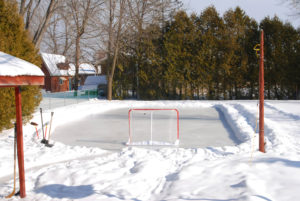
Backyard skating rink at home with snow and hockey net

A common winter scene of a backyard hockey rink in Canada

A skating rink in your own backyard? Yes, please!

A skating rink is a great way to keep kids busy, stay active yourself, entertain guests, or even use as a conversation-starting background to your social media content. Here’s how to make this easy, enjoyable feature at home this month.

  1. Get a tarp: You’ll need to line the area you want to skate on with a heavy-duty tarp. You can get all kinds of sizes, so pick one that suits the area you’re looking to cover. Amazon is an easy destination but a hardware store might be a better bet so you can see and feel the quality before buying. If you think you want to make this rink year after year, consider investing in a quality tarp from heavydutytarps.ca.
  2. Frame the area: Set up a border for your rink using wood you have – scraps, 2x4s, logs, whatever! You can also buy long boards at that same hardware store you’re shopping for your tarp at if you don’t have something suitable at home already. Keep the frame secure with brackets or angles. Alternatively, you can use snow for a frame – just be sure it’s firmly packed and fully covered by the tarp. The frame should be a bit smaller than the tarp’s area, as you’ll want the tarp to come at least 10cms up the sides.
  3. Flood your rink: Use your backyard hose to flood the area until it’s at least 5 centimeters deep. Now the hard part – wait for it to fully freeze.
  4. Decorate your creation: Use strings of outdoor lights to illuminate your rink so it can be used well into the evening. Other fun additions are folding chairs with blankets, an old scrap of carpet where you can put skates on and off, a portable fire pit, a cooler to keep your beverages in, or even an outdoor patio lamp style heater (just not too close to the rink!).

I hope you give this a try – and don’t let my invite get lost in the mail if you do!

Here to There: The Bridge Loan Strategy

Home Tips Jag Dhamrait 5 Jan

Bridge loan strategy for buying and selling a home

Overpass and modern architecture photographed in Chengdu at dusk

Timing is everything when you’re buying and selling a home. But… what if it wasn’t?

When you want to purchase your next dream home, you search the market for days, weeks, even months to find the perfect place. And simultaneously, you prep your own home for sale, open it for viewings, and look for the right offer and buyer.

It’s great if the dates for your purchase and sale align and you want to move in exactly one day. But what if that isn’t the case?

Enter: the bridge loan. It’s literally a bridge between your current home and your future home! It fills the gap of financing when you can’t or don’t want to pay for two mortgages for an extended period of time.

Here are some reasons a bridge loan is a great solution for you:

  1. You want to take your time moving rather than do it all in one day
  2. Your new home purchase closes before your existing home sale
  3. You want to renovate before moving in
  4. You need time to clean or empty your existing home
  5. The housing market is hot and you don’t want to miss a perfect property

If you think there must be a catch – there are a few. Here’s what you need to know:

  • Bridge loans are short term, temporary loans between 1-90 days
  • You need a firm sale agreement on your existing home
  • You will be required to make payments on both mortgages during the bridging period when you own both properties
  • A realtor is required to process the transaction
  • Cash will be required to pay realtor and legal fees, plus any mortgage penalties, outside of the bridge loan and mortgage financing

The pros: You’ll have plenty of flexibility in terms of closing and moving dates. It allows you to buy your dream home when you see it, rather than settle for what’s available in a specific time window. You also have flexibility in terms of your new home purchase, as you won’t need a full downpayment for a new home, instead using the equity you’ve already built up in your existing home.

The cons: You will pay interest on the new financing amount at a higher than your regular mortgage. Plus, you might incur fines for breaking your existing mortgage. You also need to have a lump sum of cash to pay for closing and sale costs. You might also have to use any existing financing sources first, like maxing your line of credit.

Bridge Loans for Land: Some lenders will also offer you the ability to use bridge financing for purchasing land. This works well if you don’t have construction financing secured yet, or you haven’t decided what to do with that land right away. There are more considerations than with an existing home, like borrower options, your net worth, the location of the site, etc.

How it works: You’ll need to use a lawyer and a realtor. When you complete your new home purchase, you’ll sign documentation that guarantees you will use the funds from your sale to pay off the bridge loan (you won’t get any cash out of the deal). Your lender may also require a collateral charge on the property you’re selling, depending on their conditions and the amount of the bridge loan.

Next steps: Want to calculate what it would cost, run your scenario for viability, or even apply for a bridge loan? Call or email me! It costs nothing to get my expertise on the financial aspects of your home purchase and financing plans!

Economic Insights from Dr. Sherry Cooper – December 2023

Economic News Jag Dhamrait 5 Dec

Economic Insights from Dr. Sherry Cooper – December 2023

As we move into year-end, we have every reason to believe that the economy has slowed and inflation, while still above target, has dropped significantly. But slower inflation does not mean falling prices in most markets. Yes, gasoline prices are down, and food inflation has slowed, but the purchasing power of households has not improved.

Consumer confidence is down as many households fear their mortgage renewals, where rising monthly payments will dig even deeper into their discretionary income.

Mortgage arrears are still at historical lows, but credit card and auto loan delinquencies are rising. Housing markets have slowed considerably, even as lenders cut their fixed mortgage loan rates. Declines in variable-rate loans generally await an easing in monetary policy by the Bank of Canada, which is still likely at least six months away.

The good news is that interest rates have likely peaked. So far, the economy is on a glide path for a ‘softish’ landing. I doubt we will see two consecutive quarters of negative growth. And, if we do, the central bank will respond sooner with rate cuts.

The fiscal authorities’ hands are tied. Many accuse Ottawa of increasing budgetary red ink too quickly over the past eight years, especially during the pandemic. Now that market-determined interest rates have risen sharply, the debt financing costs are spiking. The Liberals’ popularity is waning, and while business is calling for investment tax credits and everyone wants more affordable housing, the feds can only marginally affect these issues, given budgetary and political constraints.

The latest gimmick is to reduce short-term rentals by restricting Airbnb properties in some ways, but that will again have a meagre impact. Encouraging construction with GST elimination and cheaper credit is helpful. Still, even if they do lead to 30,000 new rental properties, that’s a drop in the bucket when planned permanent immigration is slated for 500,000 people per year.

The real rebound in economic activity is coming when the BoC signals it will cut the overnight policy rate. In the meantime, it is now a buyers’ market in many localities as home prices decline. The spring housing market could show a meaningful pickup in anticipation of lower rates and more housing supply. Motivated sellers will be out there, and buyers can pre-approve and take their time finding the right fit. The multiple-bidding wars are over. The housing market will lead the economy upward next year.

Mortgage Renewal Benefits

Mortgage Tips Jag Dhamrait 20 Nov

Is your mortgage coming up for renewal? Do you know about all the incredible options renewing your mortgage can afford you?

If not, I have all the details here on how to make your mortgage renewal work for you as we start to think about 2024.

Get a Better Rate
Are you aware that when you receive notice that your mortgage is coming up for renewal, this is the best time to shop around for a more favourable interest rate? At renewal time, it is easy to shop around or switch lenders for a preferable interest rate as it doesn’t break your mortgage. With interest rates expected to come down as we move into the New Year, taking some time to reach out to me and shopping the market could help save you money!

Consolidate Debt
Renewal time is also a great time to take a look at your existing debt and determine whether or not you want to consolidate it onto your mortgage. For some, this means consolidating your holiday credit card debt into your mortgage, for others it could be car loans, education, etc. Regardless of the type of debt, consolidating into your mortgage allows for one easy payment instead of juggling multiple loans. Plus, in most cases, the interest rate on your mortgage is less than you would be charged with credit card companies.

Start on that Reno
Do you have projects around the house you’ve been dying to get started on? Renewal time is a great opportunity for you to look at utilizing some of your home equity to help with home renovations so you can finally have that dream kitchen, updated bathroom, OR you can even utilize it to purchase a vacation property!

Change Your Mortgage Product
Are you not happy with your existing mortgage product? Perhaps you’re finding that your variable-rate or adjustable-rate mortgages are fluctuating too much and you want to lock in! Alternatively, maybe you want to switch to variable as interest rates start to level out. You can also utilize your renewal time to take advantage of a different payment or amortization schedule to help pay off your mortgage faster!

Change Your Lender
Not happy with your current lender? Perhaps a different bank has a lower rate or a mortgage product with terms that better suit your needs. A mortgage renewal is a great time to switch to a different bank or credit union to ensure that you are getting the value you want out of your mortgage if you are finding that your needs are not currently being met.

Regardless of how you feel about your current mortgage and what changes you may want to make, if your mortgage is coming up for renewal or is ready for renewal, please don’t hesitate to reach out to me! I’d be happy to discuss your situation and review any changes that would be beneficial for you to reach your goals; from shopping for new rates or utilizing that equity! I can help you find the best option for where you are at in your life now and help you to ensure future financial success.

Winterizing Your Home

Home Tips Jag Dhamrait 10 Nov

We Canadians are no strangers to the chill of the winter season!

As we shift into the final few months of 2023, now is a great time to check your home before the cold front hits. Below I have included a few tips that could help you save on bills, prevent future repair costs, and be more comfortable all winter long.

  • Inspect Your Fireplace: There is no better time than now to have your fireplace inspected to ensure optimal efficiency and heat output. Whether you have a wood-burning, gas, or electrical fireplace, proper maintenance can go a long way for your heating bill!
  • Maintain Your Furnace: While you’re having your fireplace inspected, don’t forget to maintain your furnace! If your furnace is getting up there in age, you may want to also consider replacing it as typically newer furnaces are more efficient than the previous generation, which could help save on energy costs. Either way, ensuring your furnace is in working order will guarantee top output and a cozy winter!
  • Clean The Gutters: The last thing you want is your gutters to be clogged when the snow hits! Cleaning your gutters from Fall leaves and other debris will help ensure proper drainage for melting snow. For those who want to go the extra step, consider gutter guards which can help keep out unwanted objects from your gutters.
  • Examine Your Roof: While you’re prepping your gutters for the winter, it is a good idea to also examine your roof. A few things to look for include broken or missing shingles, damaged flashing, staining from water leakage, and ventilation.
  • Consider a Programmable Thermostat: According to experts, a degree drop in your home temperature can measure up to 1% on your heating bill. For those of us who don’t like to have cold feet all season, smart thermostats are a great way to keep warm and optimize your energy savings! Ideally, you want to set your thermostat to turn on in the morning, off when you go to work, and back on in the evening to ensure a toasty welcome.
  • Insulate Windows: Always be sure to check your windows for any gaps or water leakage and get them resealed as soon as possible. If you live in a particularly cold location, consider swapping out your windows to double-paned glass for an added layer of insulation. Another tip to keep the cold from seeping in through your windows is swapping out your curtains for a heavier, thermal-lined set which can do wonders!
  • Check Your Pipes: Checking pipe joints for leaks that could cause rot and damage will save you trouble in the future. Repair any cracks you find, especially those around electrical outlets and alarm system lines. You can also consider foam pipe insulation, which is fairly easy to install and could help prevent energy loss and potential water damage from frozen pipes.
  • Stock Up on Supplies: There are a few things you might want to consider stocking up on ahead of time for the winter season, such as flashlights and batteries, ice melt, extra pet food and canned goods, and an emergency storm kit that includes an extra flashlight, candles, portable radio, water, and snacks.

With a little preparation, you can keep your home in good shape without needing to feel the cold bite of winter!

Economic Insights from Dr. Sherry Cooper – November 2023

Economic News Jag Dhamrait 1 Nov

The Canadian economy is showing continued signs of slowing as inflation decelerates. This opens the door for a continued pause in rate hikes. Indeed, with any luck, the Bank might have finished its tightening cycle.

One more rate hike is possible, especially if continued Middle East tensions lead to a sustained oil price increase, but the odds are against it.

This does not suggest, however, that interest rates will decline anytime soon. Headline inflation in September was posted at a 3.8% year-over-year pace, well above the Bank’s 2% target. Wage inflation remains at roughly 5%, and inflation expectations remain high.

However, the economy is slowing, and excess demand in labour markets is waning. Third-quarter economic growth is likely to be less than 0.5%, and leading economic indicators are pointing to a further slowdown in the final quarter of this year and the first quarter of 2024.

Canadian consumers, weighed down by record debt loads and high prices, are tightening their purse strings. Savings rates have fallen, and retail sales per capita have slowed markedly. Sales were down in six subsectors: car dealers, furniture, electronics, and appliance retailers.

Canadians are quickly rolling back their purchases of goods as more households face mortgage payment renewals. The Bank of Canada consumer survey suggested that families expect more adverse effects ahead as an increasing volume of mortgages come due for renewal or refinancing.

Businesses are also tightening their belts as the recent Bank of Canada Business Outlook survey showed considerable weakness. The Bank is counting on softening demand to translate into a slower inflation rate in the coming months.

I expect the central bank to cut interest rates in mid-2024, gradually taking the overnight policy rate down. In the meantime, housing markets will continue seeing a surge in new listings and more favourable buying opportunities.

Spooktacular Home Tips

Home Tips Jag Dhamrait 15 Oct

It is hard to believe October is half done already!

Even though Fall has already started, there are a few things you can do still to ensure your home is well-prepared for the season.

Whatever your plans, a quick check of your home will ensure there are no surprises!

  • Examine Your Gutters: This time of year it is important to clean and inspect your gutters (replacing as needed) to ensure they are working properly as the rain and snow season hits. If they are clogged or damaged, it could result in flooding or exterior damage – so don’t wait!
  • Check for Drafts: In the Fall and Winter, many homeowners are spending extra money heating their homes due to drafts, but it doesn’t have to be that way! Do a check on all exterior doors and windows to confirm if they are properly sealed. To do this, simply close a door or window on a strip of paper. If the paper slides easily, you need to update your weatherstripping.
  • Inspect Your Furnace: In Canada, we are no strangers to chilly evenings! To ensure you are comfortable throughout the colder months, be sure to have your furnace inspected by an HVAC professional. They can check leaks, test efficiency, and change the filter. They can also conduct a carbon monoxide check to ensure air safety.
  • Manage Your Thermostat: As tempting as it is to turn your heat all the way up in the winter, proper thermostat management will help you save costs in the long run. Using a thermostat with a timer can save you even more. Turn them on earlier so the room heats up in time for use and have it turned off 30 minutes before bed or before leaving the home. If you find you are still chilly at night, a safely positioned space heater and closed door is an inexpensive solution.
  • Fix Any Concrete/Asphalt Cracks: This one is easy to ignore thinking it will be fine, but it could easily turn into a bigger issue. When water gets into existing cracks during the colder months it will freeze and expand, causing the crack to become even larger.
  • Turn Off Outdoor Plumbing: Since your garden will not need attention until the Spring, it is a good idea to shut off and drain all outdoor faucets and sprinkler systems. Depending on where you live, you might also want to cover them to prevent freezing during the Winter months.
  • Change Your Batteries: For safety, it is recommended that you check that all smoke detectors and carbon monoxide devices are working at least a couple of times throughout the year. While doing other Fall home prep, add this one to your list!
  • Create a Storm Kit: A storm kit is a handy source of essential items in the event of losing power. Consider what you and your family might need, such as a flashlight with new batteries, candles, matches, a portable radio, water, and snacks. Keep your kit somewhere easy to access.
12